Tuesday, 23 February 2010

Final Fantasy: Pressure to produce

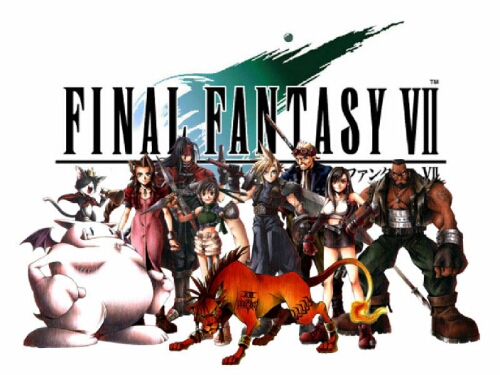
This is a purely research entry to delve into the pressures placed upon the Final Fantasy franchise to produce content. This mainly centers around Final Fantasy developers, Square enix, expanding on the Final Fantasy 7 universe.

As an avid follower of the Final Fantasy franchise myself, in particular the FF7 ( Final Fantasy 7) series, I was overwhelmed at the way the game manipulated my emotions into caring for these fictional and virtual beings, so much so that I was spurred to play on until the very end. FF7 kept me hooked by employing interwoven, complex and n
on linear narratives that all pulled together during the finale to make me feel apart of fighting for the common goal of the characters. After the game came to a climatic end and the last few scenes of cinematic scrolled past my eyes I was left slightly at a loose end. I still had many questions I felt were left unanswered by the game.

In the subsequent years since Final Fantasy 7 was released a total of 3 console titles, 1 feature length film and one animated film have been released, all expanding the universe and developing the characters to new levels. Its arguable that these sequels and prequels were made to validate the original game in the eyes of its massive multinational fan base. In an interview with IGN about the latest FF7 title, Crisis Core, Yoshinori Kitase, Final Fantasy 7 & 8 developer stated "Obviously as part of a beloved series, part of a popular world, there's immense pressure to produce". Kitase goes on to to talk about how essential it was that the new title in the series didn't pay homage to it's predecessor, but instead made a vital overview from past events in the universe that as a whole linked the series. Crisis core was released in 2008 throughout Europe and details several key events that were mentioned but never fully explained within FF7. Crisis core also develops on the character Zack, who had a minor yet vital role within ff7. This prequel of a game in enlightening to the events of FF7, however if a new, unbiased gamer would play the game they would have little or no understanding of the in depth storyline, or indeed who the characters really are. Due to this it can be argued that the subsequent games and feature films to the FF7 series were only created for the current fan base.

A further member in the FF7 family is the long anticipated film, Advent Children. This movie focuses on events set some time of the those that occurred in FF7, and satisfied the fans yearning for answers to any loose ends left from the game. Reviews of this movie made by non fans often state that the film left them feeling confused. One review states
"Here’s the thing: “Advent Children” was made entirely for hardcore fans of “Final Fantasy VII” - and nobody else." However a review from a FF7 paints a different picture; "If you're a fan of Final Fantasy VII, then this is the next best thing to a full-fledged sequel. If you aren't a fan, you'll still probably agree that it's an amazing visual experience" From an unbiased point of view the FF7 franchise seems confusing and unforgiving to outsiders, making very hard for the series to expand their fan base. However Advent Children and Crisis core were not created with the ideal of drawing in new fans, but to please and reignite the interests of the massive fan base to this game series that they already possess.

It can be said assumed that Square Enix are under massi
ve pressure both self imposed and fan initiated to bring out products to support the FF7 universe. This is confirmed by the constant stream of transmedia titles all aimed at informing and pleasing the fans. The ever enthusiastic community has also placed pressure upon Square Enix to created a remake of the original FF7 game, claiming new technologies would increase the games capabilities and draw in a bigger crowd. Fan community rumors also speculate that this project has been undertaken by Square Enix. No official confirmation to a remake has been made, however Square Enix have made a few unassuming hints that there could be a possible remake in the future.

It would be foolish to just consider one game out of the entire Final Fantasy franchise to pen the b
asis for this assumption on. A further title with a similar story would be Final Fantasy 10. Again, as with FF7, FF10 was thoroughly immersive and tugged on many emotions with as much success as FF7. As the game drew to a close it was almost left open ended in order to include a sequel if one was demanded. A further interview with Kitase for IGN stated "Fan reaction was larger than we expected and we decided to continue the story of Yuna and surrounding characters in a sequel" Producing a sequel purely on the demands of a fan indicated that Square are under an uncertain amount of pressure to feed their fans with new information on the virtual worlds that they have grown attached to.

To summarize on this section it is naive to believe that Final Fantasy sequels are produced entirely on the basis of how successful they are in terms of how much money they take on launch day. Instead we need to consider how the series develops within the fan community, and how pressure placed on big corporations buy the people that love their games leads to certain avenues being followed.

References used;

http://uk.ps2.ign.com/articles/442/442025p1.html
http://efilmcritic.com/review.php?movie=14321&reviewer=392
http://www.elecplay.com/reviews/view/?article=11284
http://videogames.yahoo.com/news-1208351
392

Tuesday, 16 February 2010

Final Fantasy 7: Transmedia storytelling


The Final Fantasy game series is one spanning many different games, platforms and mediums. This blog is just a small update delving into the transmedia storytelling that several specific FF games employ to deliver the whole story.

Final Fantasy 7 is a prime example of a storyline crossing mediums to deliver a end whole result.
FF7 was first released in 1998 and followed the main character 'Cloud' who strives to save the planet from the main antagonist 'Sephiroth'. Although the first part of the FF7 series, FF7 the game is only a small part of the story as a whole and in a way acts as the middle part of the narrative. After FF7 was released there have been a succession of movies, animations and partner games that delve into events, before, after and during FF7.

FF7: Last order is an animated film set during the events running up to the beginning of FF7 the game. Last order follows the story of Zack and Cloud as they make their way towards Midgar, the fictional capital of the FF7 planet. Last order was released to 'fill in' various segments of the story that the FF7 game failed to divulge, it even goes as far as to explain certain events in further detail, enlightening the fans.

In direct contrast to FF7: Last Order, the feature length CG animated film 'Advent Children' was released. Advent Children instead of looking into the pas, tell the future story of the FF7 universe set after the events of FF7. As well as recalling previous events from the game the FMV furthers the story allowing fans to understand what has become of their favorite heroines and heroes.

As we can see the FF7 story transcends different types of mediums to inform the user of the complete picture. Each section of the story, no matter the platform, weaves together like a continual mosaic, flowing well and backing up any previous actions or event.

The creators of the FF7 series successfully spread their narrative across the platforms to deliver the story in a well constructed way, however as with many transmedia stories it is essential to be filled in on the events and happenings of each part of the saga to be full 'in the know'.


Saturday, 13 February 2010

Final Fantasy: Fandom

The Final Fantasy Franchise is vast, covering 13 different main title games and numerous spin offs. Along with all these games fan have the freedom to express themselves in many ways, all in relation to the final fantasy series. This blog is aimed at uncovering various mediums in which fans express themselves and their love of the final fantasy franchise!

The first and most obvious outlet of FF
fandom is defiantly the internet. Using the internet fans are able to dig up heaps of information on their favorite games through websites dedicated to providing information and guidance on the series. The more popular websites provide a much more in depth look into the games. http://www.ffonline.com/ is a fan made website that slowly has gained momentum to becoming one of the most respected and informative FF fans sites on the Internet. FFonline provides everything from complete and intricate walkthroughs down to every piece of official FF art ever made. It really is the complete package for FF fans wanting to dig up the dirt on the series. Another more complex FF website is http://finalfantasy.wikia.com/wiki/Final_Fantasy_Wiki. This website is based on the online encyclopedia, wikipedia, and is itself an entire encyclopedia on the series. Fans are able to log into this website and alter its content themselves.

FF
fandom is also present away from the online based outlets. An activity known as 'Coslplay' (costume playing) is a massive part of fandom within the FF series. FF cosplay involves fans dressing up as their favorite characters from any of the games and attending massive conventions with like minded people. It can in a way be compared to a Star Trek convention. Cosplaying is a fun way for fans to get together and discuss their favourite games/films/Anime, and is pretty much unique to fan culture.


Futher FF fandom can be found in fanfiction. Fanfiction is basically fans creating their own story lines to intertwine within the final fantasy universe. For instance fanfiction can take the storyline of FFX and create it in an alternative way in which certain event didn't happen where other did. This allows fans to expand on the series in their own way.

Final fantasy
fandom does incorporate a wide number of mediums all aimed at pleasing the fans.

Wednesday, 27 January 2010

Silent Hill: Convergance across Media

"Silent Hill" the movie has many relations and characteristics of a survival horror game. Specific points bought to notice include the following;
  • Camera angles used within the cinematic were very reminiscent of survival horror game play, for instance a high and almost 'birds eye' view of a hallway was shown which revealed the entirety of the hallway, yet none of what was beyond that. This is typical of a 3rd person survival horror game therefore the film emulates the game in that sense.

Left: Game. Right: Film- The screen shot the similarities between game and film camera shots
  • As with the Silent Hill game series very little dialogue is present with the film clip. Within this genre of game dialogue is only usually applied at critical stages of the game to further narrative progression. Taking this into account the film can be compared with a survival horror game as very little of importance is said apart from at stages where the plot needs to evolve.
  • A further similarity between the Silent Hill game and film franchise is the soundtrack and backing track used. In the Silent Hill game series, as well as other popular Survival horror games such as the Resident Evil series, the backing music is hauntingly quiet and eerie during the scenes where the character is in danger or is approaching a critical point. As the character meets danger or reaches a certain predetermined point in the game the music starts to change into something more fast paced and industrial, alerting the player to oncoming danger or plot changes. In the film the same music placement is applied. As the female walks through the fog the music is quiet and gentle pulsing. However in strict contrast to this as she walks into the dark the backing music gets louder, becomes more industrial, introduces prominent sirens and pulsates more clunky and loudly. Just like the game this signifies impending danger and horror.
  • To coincide with the more obvious convergence between the game and the film less noticeable ones such as the relation from game cut scenes to actual cinematic. As the film plays little is spoken or understood as the female character navigates the world by herself. As soon as an extra point of interest is added, such as the police officer, more dialogue and action is present. This portrays itself in such a way that this part of the film seems bares similarities to a cut scene. In contrast the parts of the film where the lead female character wanders by herself seem more like actual game play, especially when taking into consideration the above.
  • As the character navigates the new world she is thrust into various items become available at her disposable. Items such as a lighter, a set of keys and later on a torch are reminiscent of items placed within games belonging to a survival horror genre. As the film clip continues the characters seems to conveniently stumble upon these items which seem apparently necessary to her survival in this new world. This again is similar to the format of a game where items are given to the player to aid their survival. This in a way is replicating an in-game inventory of useful items. The screen shots to the right show the usage of items in both film and game.
  • During the film the female character navigates the foggy world using a series of bus route maps placed on several street corners. This is similar to the way a player would need to solve a puzzle or collect certain things to advance further in the narrative or complete a goal.
  • finally, iconography is used at varying intervals during the film clip. An example of this would be the opening shot of the sign for the town 'Silent Hill' indicating to the viewer where the character is. Another example would be the scene where the character is walking down a street and the camera shot shows her walking past an old dress shop with several charred manikins. These are bought to the attention for a reason and all bare significance to the character or the plot further on. This is similar to a game in the sense than certain aspects are highlighted on purpose to draw the players attention.
In summary of the above, the Silent Hill movie is part of the Silent Hill franchise and therefore must reflect something of this to keep its current fan base interested. The key similarities between film and game are;
  1. Camera Angles
  2. Dialogue
  3. Sound track
  4. Game play in Film
  5. Items/inventory
  6. Puzzles and goals
  7. Iconography